
 EN
EN
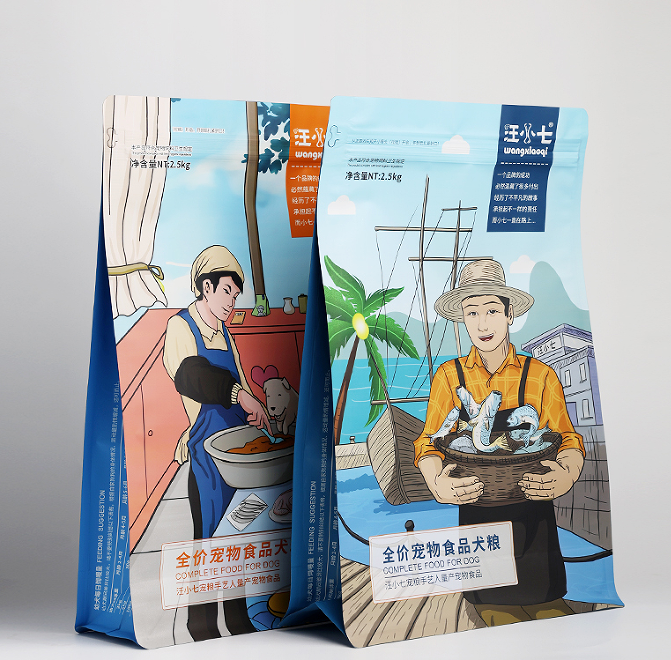
Regulatory Compliance: Meeting Global Standards for Pet Food Bags Packaging
Key Regulatory Bodies and Certifications (FDA, EFSA, ISO 22000, Country-Specific Mandates)
Pet food packaging needs to meet strict rules that vary from country to country. Take the United States for example, where the FDA requires companies to put nutritional info right on the bag and has banned BPA from touching actual food products since around 2013. Things work differently across Europe too. The EFSA has this big regulation called 1935/2004 that basically says packaging can't react with food, needs tracking throughout production, and should be recycled if possible without compromising quality. Many manufacturers also go for ISO 22000 certification because it shows they have good systems in place for food safety. This includes looking at potential hazards, setting up ways to stop problems before they happen, and dealing with contamination risks when they do appear. Getting certified isn't just about checking boxes though; it helps build trust with customers who care about what goes into their pets' bowls.
Looking at country specific regulations adds another layer to this picture. In China, the GB 4806 series demands that all food contact materials go through pre market approval and migration testing before they hit shelves. Meanwhile over in Japan, their Food Sanitation Law imposes pretty tight restrictions on how much metal or solvents can migrate from packaging into actual food products. Companies need to take these seriously because failing to comply isn't just bad news legally either. When recalls happen, the average cost runs around 740 thousand dollars according to a study by Ponemon Institute back in 2023. That kind of financial hit makes it absolutely necessary for businesses to build products right from the start that meet all those standards if they want to get into new markets without damaging their reputation along the way.
Labeling Essentials: Bilingual Requirements, Allergen Disclosure, Batch Traceability, and QR Code Integration
Proper labeling isn't just about following the law it's also where brands connect with their customers face to face. Companies need to think about bilingual options too since around three quarters of big export markets demand it these days. Take North America for instance most places want products labeled in both English and Spanish while Canadian markets typically require English plus French. When it comes to food items containing common allergens like soy wheat gluten or dairy products manufacturers have no choice but to list them clearly on packaging. This applies across major regions including Europe Britain the United States and Australia. The rules exist not only to protect businesses from liability issues related to cross contamination but also because many people especially those with pets must know exactly what ingredients are present when making purchasing decisions.
When manufacturers embed batch information through alphanumeric codes or DataMatrix symbols, they can execute product recalls much faster than companies without such coding systems. Response times drop around two thirds when these tracking methods are in place. Adding QR codes takes this one step further, connecting customers straight to where ingredients came from, showing when products will expire, and even providing local recycling instructions based on geography. Last year, a major player in the pet food market ran some tests with QR coded packaging. The results were pretty impressive actually - about forty percent fewer questions came in from customers regarding compliance issues. This kind of openness doesn't just meet regulations, it builds genuine trust between brands and their consumers over time.
Material Performance: Selecting Pet Food Bags Packaging for Shelf Life & Transit Integrity
Barrier Comparison: PET/AL/PE vs. MET-PET/PE for Moisture, Oxygen, and Light Protection
Material selection directly governs shelf life, safety, and transit resilience. For high-fat or moisture-sensitive pet foods targeting 18+ month shelf life, barrier performance is non-negotiable:
- PET/AL/PE laminates combine aluminum foil with PET and PE to deliver exceptional oxygen barrier (<0.5 cc/m²/day), near-total light blockage (99%), and ultra-low moisture transmission (<0.1 g/m²/day). Their structural integrity supports long-haul ocean and air freight—but adds 15–20% weight versus metallized alternatives.
- MET-PET/PE structures, using vacuum-metallized PET instead of foil, offer strong moisture resistance and lighter weight, yet permit higher oxygen transmission (2–5 cc/m²/day) and reduced light protection (85–90%). While more compatible with existing recycling streams, they’re less suited for extended ambient storage of oxidation-prone formulas.
| Material Structure | Moisture Barrier | Oxygen Barrier | Light Protection | Weight Impact |
|---|---|---|---|---|
| PET/AL/PE | Excellent | Exceptional | 99% | High |
| MET-PET/PE | Excellent | Moderate | 85–90% | Low–Moderate |
For premium dry kibble or freeze-dried products, PET/AL/PE reduces rancidity-related spoilage by up to 40% over metallized options—justifying its use where shelf life and freshness assurance are primary objectives.
Real-World Resilience: Validating Temperature and Shock Resistance via ISTA 3A and ASTM D4332 Testing
Transit durability cannot be assumed—it must be verified. Export-bound pet food bags face extreme thermal cycling (-20°C to 50°C), humidity fluctuations, vibration, and compression during container stacking. Two key protocols provide objective validation:
- ISTA 3A simulates parcel delivery conditions, subjecting bags to 60 minutes of 6 Hz vibration, multiple drop tests from defined heights, and controlled humidity exposure. Passing units show no seam delamination, seal failure, or leakage.
- ASTM D4332 assesses environmental conditioning and static compression resistance—top-performing constructions withstand >250 lbs of sustained load without deformation or rupture, a critical threshold for full-container stacking.
Bags certified to both standards demonstrate 95% fewer leaks over six-month shipping cycles. To reinforce vulnerable sealing zones, specify inner PE layers between 120–150 microns—proven to increase puncture resistance at heat-sealed edges without compromising seal integrity.
Commercial Viability: Scaling Pet Food Bags Packaging Across Export Markets
MOQ Flexibility, Multi-Region Print Customization, and Rebranding Support for Localized Launches
When it comes to scaling packaging operations, flexibility is key from day one. Brands can start small in new territories thanks to tiered MOQ structures that let them test waters without breaking the bank on inventory. This approach helps companies gather valuable market insights before committing to larger volumes. For print work across multiple regions, customization isn't just nice to have but essential for success. Think about bilingual labels that make sense locally, images that connect with different cultures, colors that resonate in specific markets, plus those important certification stamps like UKCA or JIS. These elements need to be built into the printing process right from the beginning rather than added later as an afterthought, which often leads to wasted time and money.
Branding isn't just about words anymore. Companies can quickly change nutrition icons, feeding instructions, and marketing highlights to match what regulators want or what local shoppers expect. Thanks to advances in digital printing, even small batches of localized packaging are now affordable options for businesses targeting specific regions or demographics. Some companies report getting products to market 40% faster when they take advantage of these capabilities. Combine this with materials that already meet regulatory standards and consistent finishing processes, and packaging stops being just another expense sheet item. Instead, it becomes something that actively drives business forward rather than holding it back financially.
Sustainability and Market Differentiation in Pet Food Bags Packaging
Sustainability isn't just something companies can choose to do anymore. It has become a key factor that sets businesses apart, driven by rules, ethical considerations, and what people actually care about. Looking at numbers, the pet food packaging industry generates around 300 million pounds of plastic waste each year in the United States alone. Most of this ends up in landfills instead of getting recycled according to Cremedemint's 2025 report. These facts are pushing governments to act harder on regulations like the EU's Single Use Plastics Directive and California's SB 54 legislation. At the same time, consumers are changing their minds too. A recent study from the 2025 North American Pet Industry Market Analysis shows that nearly half (about 52%) of pet owners in North America look specifically for products with eco friendly packaging when shopping.
Brands that want to stay ahead are creating tailored solutions for sustainability challenges. For instance, high barrier mono material polypropylene films let products get recycled at the curb while still keeping food fresh on store shelves. There's also plant based films available now, like those withTÜV OK Compost Industrial certification, which help companies achieve their circular economy targets. Lightweighting is another big trend too. By cutting down on material usage somewhere between 12% to maybe even 18%, companies reduce both transportation emissions and the need for virgin materials. Some forward thinking manufacturers have started incorporating ocean bound plastic into their products and running production facilities using renewable energy sources, which gets them that coveted carbon neutral certification. These decisions aren't just about checking boxes anymore. They actually create real value for brands, protect them from increasingly strict regulations coming down the pipeline, and connect with pet owners who care deeply about environmental impact in their everyday purchases.
Table of Contents
- Regulatory Compliance: Meeting Global Standards for Pet Food Bags Packaging
- Material Performance: Selecting Pet Food Bags Packaging for Shelf Life & Transit Integrity
- Commercial Viability: Scaling Pet Food Bags Packaging Across Export Markets
- Sustainability and Market Differentiation in Pet Food Bags Packaging